PROJECT OVERVIEW
Dirty Bomb is a cooperative multiplayer game where two players communicate under pressure to defuse a virtual bomb using Raspberry Pi Devices.
PROJECT GOAL
Design a communication-focused experience that creates tension using limited interfaces and real-time collaboration.
OUTCOME
Developed a fully playable prototype using Python, MQTT, and SenseHat integration after multiple rounds of user testing and iteration.

TIMELINE
March - April
5 weeks

ROLES & RESPONSIBILITIES
UI Design
UX Research
Branding
Prototype Development
DESIGN & DEVELOPMENT TOOLS

figma

raspberry pi

github

thonny
THE EXPERIENCE

Dirty Bomb is designed around asymmetric communication and teamwork under pressure.
Players sit back-to-back, preventing them from seeing each other’s screens. The instructor has access to the bomb information, while the Defuser must rely entirely on verbal instructions to complete tasks before time runs out.
This creates tension, urgency, and collaboration through limited information and real-time communication.


ASYMMETRICAL INFORMATION
Each player only has part of the solution.

TIME PRESSURE
A countdown timer increases urgency and stress.

COMMUNICATION
Success depends entirely on teamwork and clarity.
PERSONA

ERIC CHEN
YOUTH DEVELOPMENT OFFICER
“Great communication skills goes a long way in life.”
Youth mentor who uses interactive and creative activities to teach leadership, communication, and teamwork.

AGE
25

LOCATION
Vancouver, BC

OCCUPATION
Youth Development Coordinator

BIO
Youth mentor who uses collaborative activities to teach communication, leadership, and teamwork.

GOAL & MOTIVATION
Enhance communication skills in youth
Encourage teamwork and collaboration
Develop critical thinking & problem-solving
Create engaging and meaningful activities

PERSONALITY
Enhance communication skills in youth
Encourage teamwork and collaboration
Develop critical thinking & problem-solving
Create engaging and meaningful activities

FRUSTRATION

Activities can be too complicated for participants to understand
Poor communication leads to missed goals
Low engagement and motivation during team activities
Limited time to prepare impactful activities

NEEDS IN A GAME

Clear instructions & communication

Team-based interactions

Simple controls & quick to learn

Meaningful goals & progression
SKETCHES

Mapped the complete player experience from start to finish
Visualized both win and lose scenarios
Helped define communication flow between players
Explored early gameplay interactions and actions
Tested potential SenseHat LED displays
Planned the Defuser-side gameplay experience


Refined LED layout using spreadsheet mockups
Used blue cells to represent white LEDS for readability
Developed simplified python code to prototype LED interactions
MINIMUM VIABLE PROTOTYPE ITERATIONS


USER TESTING ANALYSIS


WHAT CHANGED

Unstructured Interaction

Guided Communication
We moved from unclear instructions to a structured flow that helped players understand their roles and timing better.


Functional Gameplay
Emotionally Responsive
We shifted focus from just making it work to making it engaging and intense under pressure.
Low Clarity
Clear System
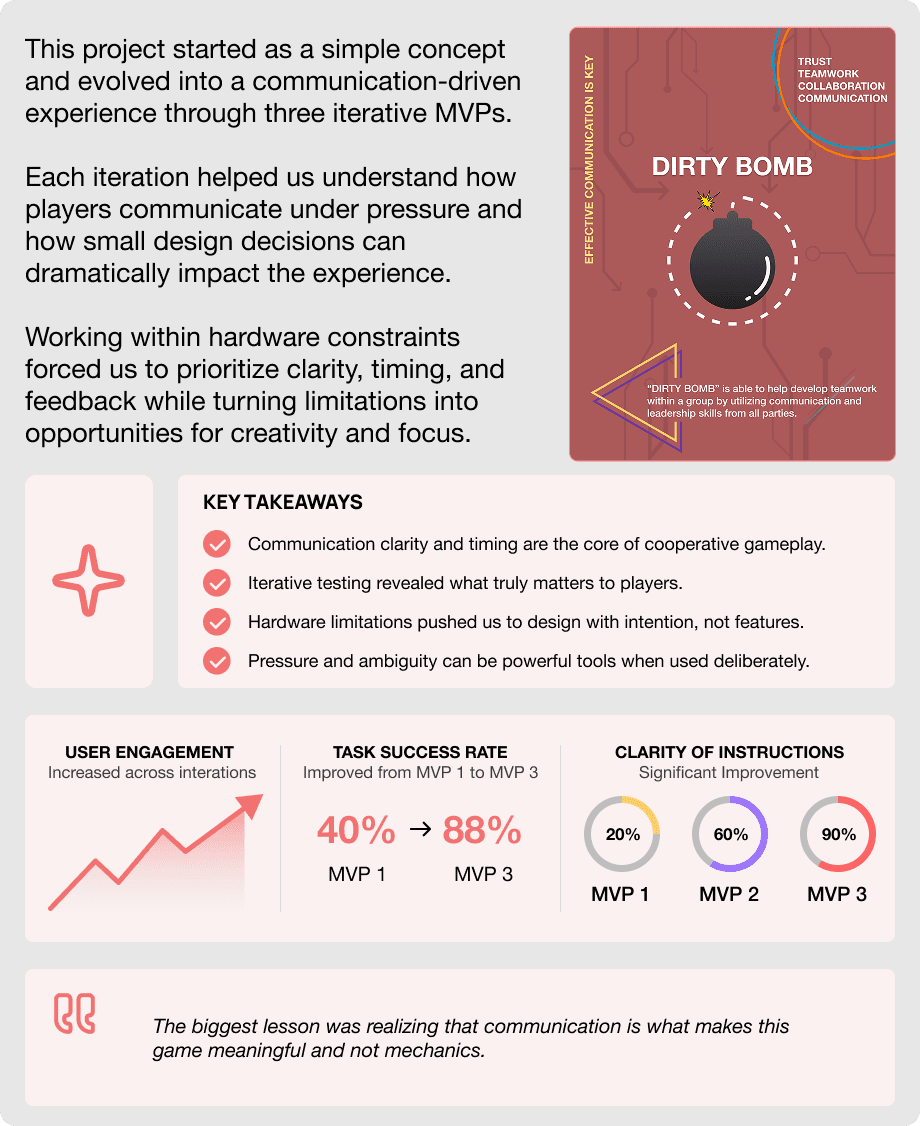
Through 3 iteration, we transformed a confusing prototype into a polished, communication-driven experience.
SYSTEM DESIGN
MQTT Communication Flow

Player 1

MQTT

Player 2
Real-time bi-directional messaging ensures both players stay in sync.
Timer Logic

Timer controls game state and urgency. Visual feedback escalates as time decreases.
Hardware Interactions

Raspberry Pi


SenseHAT
SenseHat handles input (joysticks, buttons, and output LED matrix, and orientation)
REFLECTION
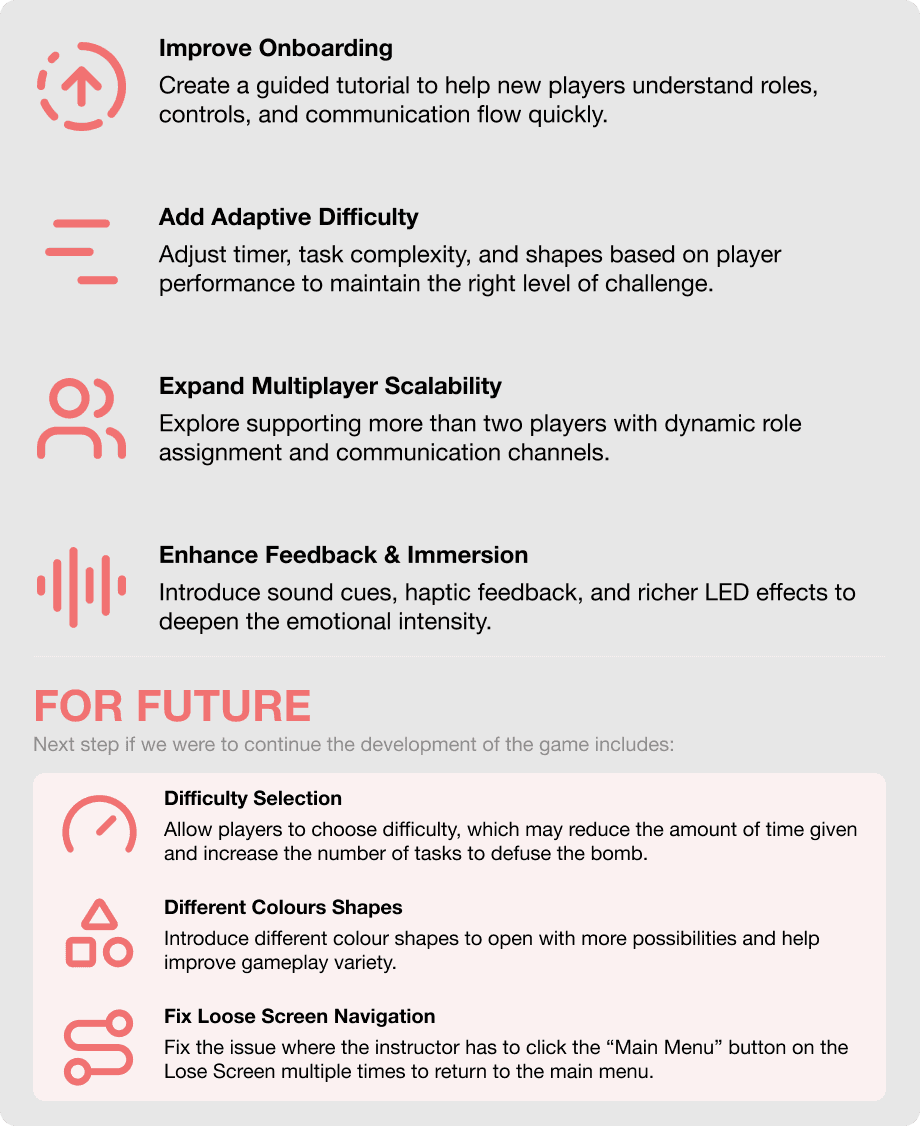
WHAT'S NEXT